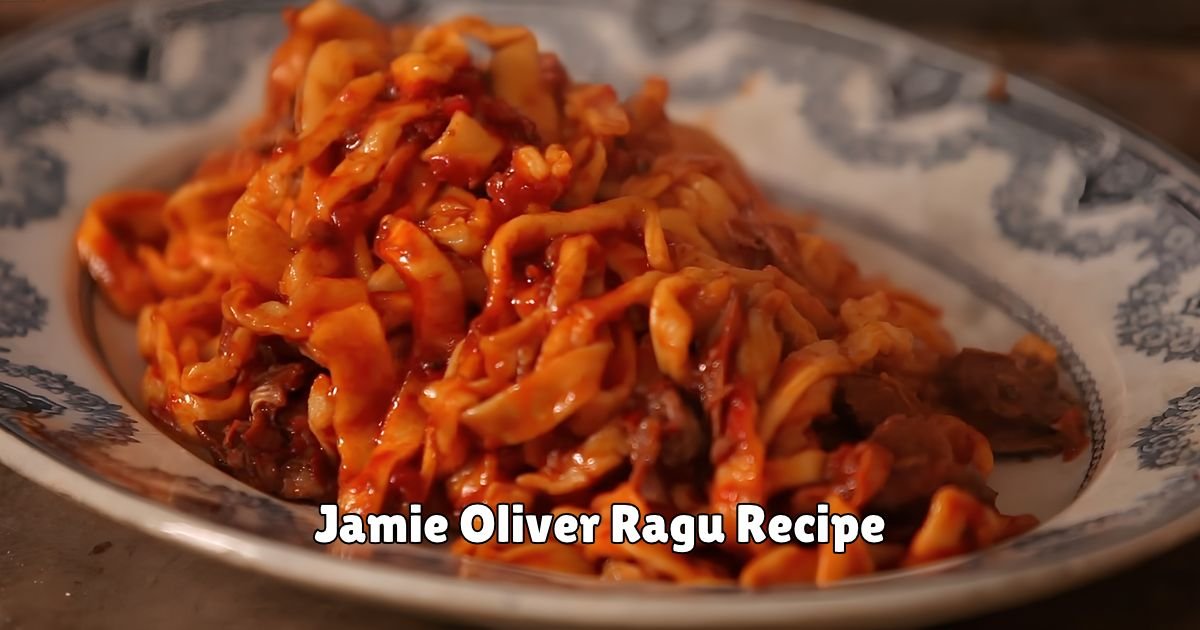
Jamie Oliver Ragu Recipe
Many people consider Jamie Oliver Ragu Recipe a family get-together favorite. Unlike many traditional ragù recipes, this version starts with just onion as its base, with no garlic or celery.
If you’re short on time, save it for the weekend, as the beef needs at least 90 minutes to become tender. You can also freeze individual portions for busy weeknights.
Many online versions rush the process, promising dinner in just 40 minutes while skipping the slow cooking that makes all the difference.
The version I wanted to recreate is inspired by the slow-cooked beef ragù served at Jamie’s Italian. Jamie Oliver opened the restaurant chain in 2008, and it became known for its sharing platters of cured meats.
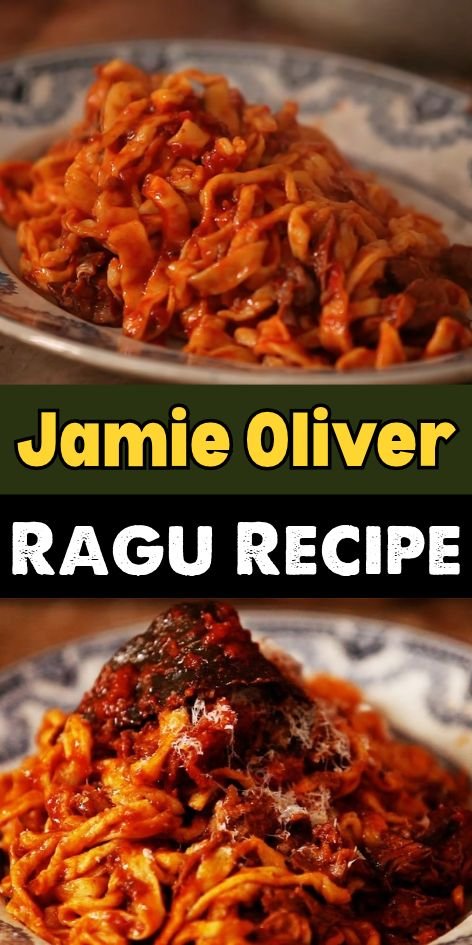
Why Chunky Meat Beats Mince in Ragu
Thin, watery ragù usually happens when minced meat is cooked for just 30 minutes in a wide pan. The liquid evaporates, but nothing thickens the sauce that remains.
This ragù recipe follows the Southern Italian tradition of slow-cooking large pieces of meat whole in tomato sauce. Bolognese is a different sauce, made with minced meat and often enriched with milk.
Beef ribs contain collagen and connective tissue, which gradually break down during two hours of gentle simmering, enriching the sauce and giving it a naturally thick, silky texture. That is why the sauce clings beautifully to tagliatelle without any flour or cornstarch.
There is no stock, either. Tomatoes, grape juice, and a little water provide all the liquid needed. Every spoonful captures the rich, deep flavor of the beef as it slowly simmers in the sauce. At the end, remove the bones and shred the tender meat before returning it to the sauce.
Ingredients for Jamie Oliver Ragu Recipe
- 3 tablespoons extra virgin olive oil, plus 2 teaspoons to finish: Oil carries the heat so the beef browns instead of sticking. I reached for Filippo Berio. Hold back the finishing spoonful, since raw oil smells brighter than oil cooked for two hours.
- 500 g (1 lb 2 oz) beef topside, cut into 5 cm chunks: Topside is lean, so it needs the full simmer to turn tender. I buy mine from the butcher counter at Whole Foods. Brisket works in place of topside and gives a richer, fattier sauce.
- 500 g (1 lb 2 oz) bone-in beef spare ribs, cut into 5 cm pieces: Bone and connective tissue give the sauce body, and the meat shreds off cleanly after two hours. Ask the butcher to cut them for you. Pick pieces with a thick cap of meat over the bone.
- 200 g (7 oz) beef sausages, halved: Sausage releases fat and seasoning into the pot as it browns, and that flavors the meat around it. I use all-beef links from the same butcher counter. Skip them and add 100 g more topside for a leaner sauce.
- 3 bay leaves: Bay adds a faint herbal edge that balances the sweet tomatoes. Gennaro breaks each leaf in half, which frees its oils faster. McCormick leaves work fine.
- 1 large yellow onion (about 280 g), sliced: Onion melts into the sauce and adds body and sweetness, with no sugar needed. Thick half-moons are fine, since they dissolve over two hours. Sweet onions work in place of yellow, though the sauce turns sweeter.
- 180 ml (¾ cup) unsweetened red grape juice, plus 1 tablespoon lemon juice: Juice lifts the browned bits off the pot and adds fruit. Lemon supplies the acid that wine would. I pour Welch’s 100% red grape juice, and the label should read juice only.
- 3 tins (400 g each) chopped tomatoes: Tomatoes supply most of the liquid and nearly all of the acid. I buy Cirio tins, which have thick pulp and little watery juice. Check the label for tomatoes and juice only.
- 2 tablespoons tomato paste: Paste adds concentrated tomato depth and a darker red than tins give alone. Mutti comes in a tube, so leftovers keep in the fridge for weeks. Loosen it in water first so it does not clump.
- 500 ml (2 cups) water, divided: Water lets the sauce simmer for two hours without scorching. Use 125 ml to loosen the paste and 375 ml to rinse the empty tins. Keep a kettle of hot water nearby for later top-ups.
- 1 bunch fresh basil (about 30 g): Basil goes in whole, stems and all, so the oils release slowly over two hours. Leaves added late turn dark and lose their scent. Potted basil from Trader Joe’s lasts longest on my windowsill. Dried oregano, about 2 teaspoons, works in place of fresh basil. Add it with the tomatoes.
- 1¼ teaspoons fine sea salt: Salt goes in early, so it reaches the middle of the beef chunks. I add a scant teaspoon with the tomatoes and the rest after tasting. Morton fine sea salt measures the same every time.
- 450 g (1 lb) tagliatelle: Wide ribbons catch pieces of meat that would slide off spaghetti. De Cecco egg nests cook in about 6 minutes. Fresh tagliatelle needs only 2 or 3 minutes in the water.
- 60 g (2 oz) Parmigiano Reggiano, grated: Parmigiano Reggiano is aged at least 12 months, which gives it a nutty salt that pre-grated tubs lack. I grate wedges from Trader Joe’s with a Microplane. Keep the rind for the next pot.
Required Kitchen Equipment
- Dutch oven, 5.5-quart: holds steady, low heat
- Wooden spoon: scrapes browned bits free
- Chef’s knife: halves sausages, slices onion
- Tongs: turns ribs without piercing
- Large stockpot: boils pasta, 6 quarts
- Ladle: skims fat, serves sauce
- Two forks: shreds beef after simmering
How to Make Jamie Oliver Ragu Recipe
1. Heat the Oil: Set the Dutch oven over medium-high heat and add 3 tablespoons of olive oil. Wait about 2 minutes, until the oil ripples and a beef chunk sizzles on contact.
2. Brown the Meat: Add the beef, ribs, and sausage halves in one layer. Leave them alone for 3 minutes, then turn with tongs. Total browning takes about 11 minutes. Listen for a loud, steady crackle and look for a dark mahogany crust.
Crowded meat steams and turns grey, which happened in my first test batch. Brown in two rounds to fix it, then return everything to the pot.
3. Add the Bay: Tear 3 bay leaves in half and drop the pieces among the meat. Stir for about 1 minute, until the steam smells herbal.
4. Sweat the Onion: Add the sliced onion and lower the heat to medium. Stir every minute for about 7 minutes, until the slices turn soft and glassy.
Sweating gives see-through slices with no dark edges. I once answered the door during this step, and the edges blackened in 2 minutes. Add a splash of water and scrape the pot. Scoop out any black pieces.
5. Pour in the Juice: Raise the heat to high and pour in 180 ml of grape juice mixed with 1 tablespoon of lemon juice. Let it bubble hard for about 4 minutes, scraping the bottom with a wooden spoon. The liquid shrinks by about half, and the steam smells of cooked grapes, not raw lemon.
6. Add the Tomatoes: Tip in the 3 tins of chopped tomatoes and a scant teaspoon of salt. Stir once, then keep the heat high until the pot returns to a bubble.
7. Loosen the Paste: Stir 2 tablespoons of tomato paste into 125 ml of water until smooth. Pour it into the pot. Swish the other 375 ml of water around the empty tins and add that too.
8. Simmer with Basil: Push the whole bunch of basil into the sauce. Lower the heat until bubbles pop lazily at the edge, and set the lid slightly ajar. Simmer for 2 hours, stirring every 25 minutes.
At 2 hours, orange oil pools at the edge and a rib bone slides out clean. A spoon dragged through the sauce leaves a trail that stays open for 2 seconds.
9. Shred the Meat: Lift out the rib bones and bay pieces. Pull the meat off the ribs and break the beef into shreds with two forks. Stir it all back in, then taste and add the rest of the salt.
The beef should fall apart under almost no pressure. Tough strands mean the pot needs another 20 minutes.
10. Toss with Tagliatelle: Boil the tagliatelle in well-salted water for 6 minutes. Drain, saving a mug of the water. Tip the pasta into the ragu with a splash of that water and toss for 1 minute.
Spoon into wide bowls, then top with grated Parmigiano and a thin drizzle of oil. The ribbons should look glossy, not dry.
Chef Tips for Jamie Oliver Ragu Recipe
- Sweet Sauce: Stir in 1 teaspoon of lemon juice at the 90-minute mark. It cuts the grape sweetness without thinning the sauce.
- Grease Slick: Tilt the pot and skim the orange layer with a ladle. Beef ribs and sausage release more fat than you expect.
- Sauce Too Thin: Remove the lid completely for the last 20 minutes and nudge the heat up slightly. Stir often so the bottom does not catch.
- Sauce Too Thick: Stir in 60 ml of hot water at a time. Cold water cools the pot and stalls the simmer.
- Scorched Bottom: Slide a flame tamer under the pot, or shift it half off the burner. Scrape gently and never stir hard.
- Splatter Everywhere: Browning ribs spit fat. Cover the pot with a splatter screen and wipe the stovetop right after.
How I Customize This Jamie Oliver Ragu
1. Smoked Paprika Base: Stir 1 teaspoon of smoked paprika in with the onion. It adds a smoky edge that cured meat would bring, and I serve this version over rigatoni on cold nights.
2. Porcini Boost: Soak 15 g of dried porcini in 120 ml of hot water for 20 minutes. Add the mushrooms and liquid, and cut the plain water by 120 ml. The earthy depth suits a bitter green salad.
3. Chili Warmth: Add ½ teaspoon of chili flakes with the bay leaves. Heat builds slowly during the simmer, which my brother prefers to hot sauce at the table.
4. Sweet Vegetable Base: Grate 1 carrot and 1 celery stalk in with the onion. Both add sweetness, so use only 120 ml of juice. I serve this version to picky eaters.
5. Parmesan Rind: Drop a 7 cm rind into the pot with the basil. It softens as it simmers and thickens the sauce slightly.
6. Milk Finish: Stir 120 ml of whole milk into the finished sauce and simmer for 5 minutes. The milk softens the tomato acid for a Bologna-style sauce, which I serve with polenta.
What I Serve With Jamie Oliver Ragu Recipe
A bitter green salad comes first. I toss arugula with lemon juice and olive oil, and the peppery leaves cut through the fat from the short ribs. Dress it just before serving so the leaves stay crisp. Shave a little Parmigiano over the top for salt.
Bread is next. Ciabatta from the corner bakery warms in a 400°F (200°C) oven for 6 minutes. My dad tears it up and chases the last sauce around his bowl.
How I Store Jamie Oliver Ragu Recipe
Cool the pot on a rack for 30 minutes. Pull out any stray bones, then ladle the ragu into shallow containers. Shallow layers chill faster than a deep pot. Label the lid with the date.
Sealed in the fridge, the ragu keeps for 4 days. Glass beats plastic here, because tomato sauce stains plastic orange. Keep cooked pasta separate, since it swells and turns soft in the sauce overnight.
Freezer bags hold the sauce for up to 3 months. Lay them flat on a tray first, so they stack like books. Squeeze out the air before sealing. Thaw overnight in the fridge.
Reheat in a covered pan over low heat with 2 tablespoons of water. Stir every few minutes until steaming. A hard boil tightens the shredded beef, so keep the bubbles lazy.
Jamie Oliver Ragu Recipe FAQs
1. Can I use fresh tomatoes instead of tins?
Yes. Use 1.3 kg ripe plum tomatoes, peeled and chopped. Fresh tomatoes hold more water than tinned, so simmer an extra 25 minutes with the lid fully off. Taste near the end, because fresh fruit can be sharper.
2. Is this ragu spicy?
Not at all. The only warmth comes from black pepper in the beef sausages. Pass a small bowl of chili flakes at the table, so each person sets their own heat.
3. Which pasta shapes work besides tagliatelle?
Pappardelle is the closest match. Rigatoni and paccheri also work, since their hollow tubes trap shreds of meat. Avoid angel hair, because thin strands let the chunks fall away and leave the sauce behind.
4. Why does my sauce taste metallic?
Tomato acid reacts with bare aluminum and unlined copper. Use enameled cast iron or a coated pan instead. A metallic sting that appears after 90 minutes points to the pot, not the recipe.
5. Can I use beef stock in place of the grape juice?
Yes. Use 180 ml of low-sodium beef stock and keep the lemon juice. The sauce loses its fruity note and tastes meatier. Hold back the final salt until you taste.
6. Can I simmer it longer than 2 hours?
Yes, up to 3 hours. Add 100 ml of hot water for each extra hour to protect the base from scorching. Past 3 hours, the beef shreds into fine threads and the sauce loses its chunky texture.
7. Should I rinse the tagliatelle?
Never. Rinsing removes the surface starch that helps sauce cling to the ribbons. Drain it and tip it straight into the pot with a splash of the cooking water.
Beef topside and bone-in ribs give this pot its body. After two hours, the meat loosens and the grape juice mellows. Tagliatelle comes out coated in thick red sauce.
Jamie Oliver Ragu Recipe
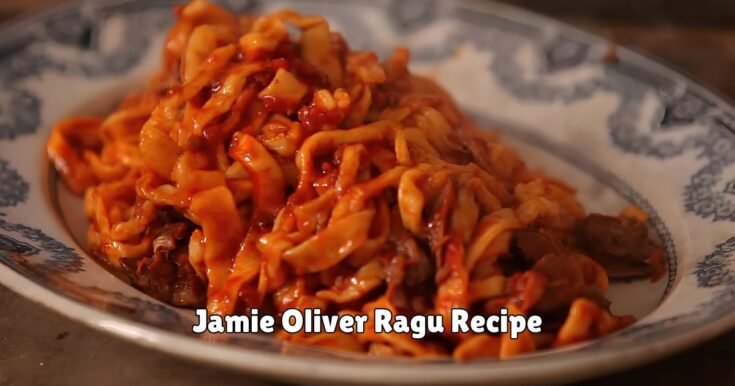
Jamie Oliver Ragu Recipe made fully alcohol-free, so kids and adults share one pot. A thick, slow-simmered sauce on the table in 2 hours 55 minutes.
Ingredients
- 3 tablespoons extra virgin olive oil
- 2 teaspoons extra virgin olive oil, to finish
- 500 g (1 lb 2 oz) beef topside, in 5 cm chunks
- 500 g (1 lb 2 oz) bone-in beef spare ribs, in 5 cm pieces
- 200 g (7 oz) beef sausages, halved
- 3 bay leaves
- 1 large yellow onion (about 280 g), sliced
- 180 ml unsweetened red grape juice
- 1 tablespoon lemon juice
- 3 tins (400 g each) chopped tomatoes
- 2 tablespoons tomato paste
- 500 ml water
- 1 bunch fresh basil (about 30 g)
- 1¼ teaspoons fine sea salt
- 450 g (1 lb) tagliatelle
- 60 g (2 oz) Parmigiano Reggiano, grated
Instructions
- Heat the Oil: Set the Dutch oven over medium-high heat and add 3 tablespoons of olive oil. Wait about 2 minutes, until the oil ripples and a beef chunk sizzles on contact.
- Brown the Meat: Add the beef, ribs, and sausage halves in one layer. Leave them alone for 3 minutes, then turn with tongs. Total browning takes about 11 minutes. Listen for a loud, steady crackle and look for a dark mahogany crust. Crowded meat steams and turns grey, which happened in my first test batch. Brown in two rounds to fix it, then return everything to the pot.
- Add the Bay: Tear 3 bay leaves in half and drop the pieces among the meat. Stir for about 1 minute, until the steam smells herbal.
- Sweat the Onion: Add the sliced onion and lower the heat to medium. Stir every minute for about 7 minutes, until the slices turn soft and glassy. Sweating gives see-through slices with no dark edges. I once answered the door during this step, and the edges blackened in 2 minutes. Add a splash of water and scrape the pot. Scoop out any black pieces.
- Pour in the Juice: Raise the heat to high and pour in 180 ml of grape juice mixed with 1 tablespoon of lemon juice. Let it bubble hard for about 4 minutes, scraping the bottom with a wooden spoon. The liquid shrinks by about half, and the steam smells of cooked grapes, not raw lemon.
- Add the Tomatoes: Tip in the 3 tins of chopped tomatoes and a scant teaspoon of salt. Stir once, then keep the heat high until the pot returns to a bubble.
- Loosen the Paste: Stir 2 tablespoons of tomato paste into 125 ml of water until smooth. Pour it into the pot. Swish the other 375 ml of water around the empty tins and add that too.
- Simmer with Basil: Push the whole bunch of basil into the sauce. Lower the heat until bubbles pop lazily at the edge, and set the lid slightly ajar. Simmer for 2 hours, stirring every 25 minutes. At 2 hours, orange oil pools at the edge and a rib bone slides out clean. A spoon dragged through the sauce leaves a trail that stays open for 2 seconds.
- Shred the Meat: Lift out the rib bones and bay pieces. Pull the meat off the ribs and break the beef into shreds with two forks. Stir it all back in, then taste and add the rest of the salt. The beef should fall apart under almost no pressure. Tough strands mean the pot needs another 20 minutes.
- Toss with Tagliatelle: Boil the tagliatelle in well-salted water for 6 minutes. Drain, saving a mug of the water. Tip the pasta into the ragu with a splash of that water and toss for 1 minute. Spoon into wide bowls, then top with grated Parmigiano and a thin drizzle of oil. The ribbons should look glossy, not dry.
Nutrition Information:
Serving Size:
1Amount Per Serving: Calories: 590